

































Support
Corporate Impact
The Night Watch: How 150 Farmers Are Guarding UP's Elephants
News & Views

The Night Watch: How 150 Farmers Are Guarding UP's Elephants

By Rashmeet Kaur Chawla · Aug 27, 2026 · 34 Views
Executive Summary

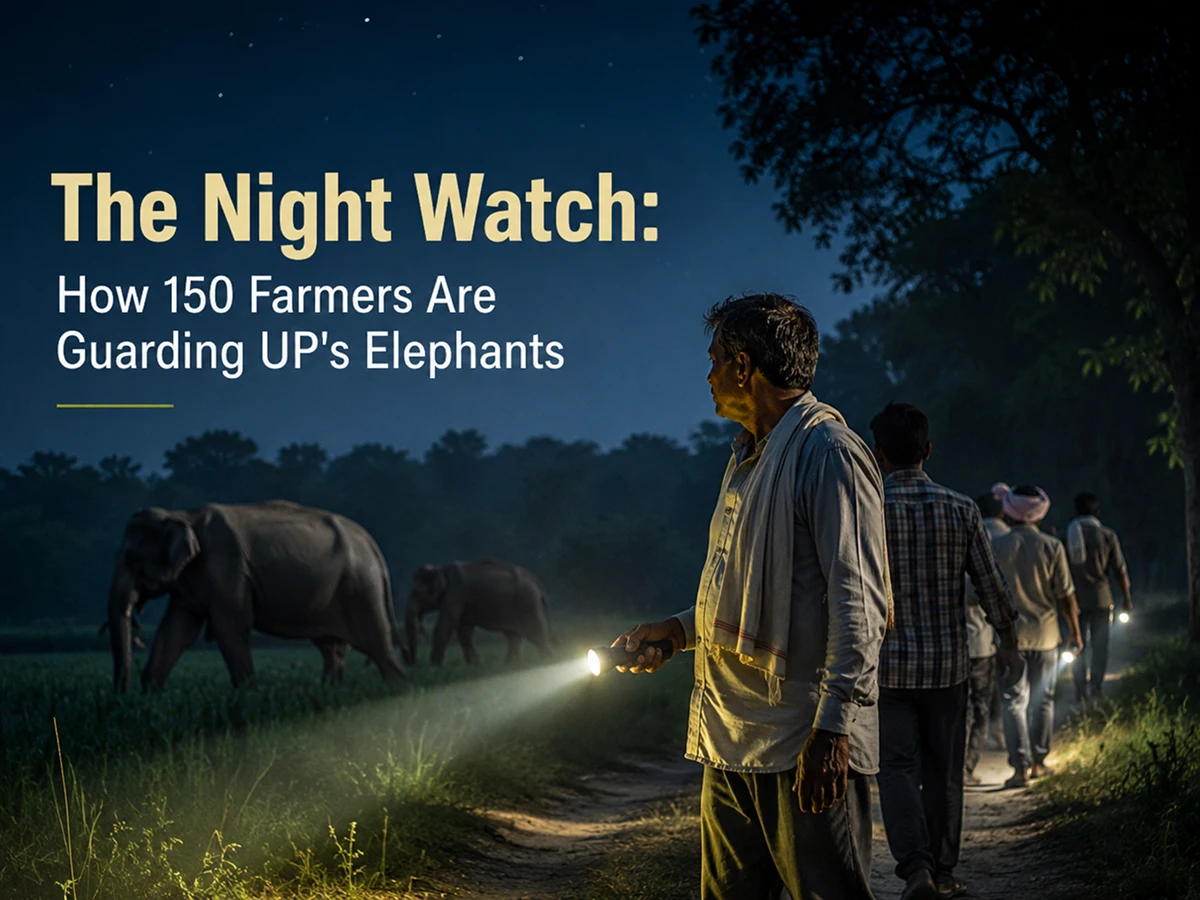
More than 150 farmers living around Uttar Pradesh’s Katarniaghat forests have taken conservation into their own hands. Using flashlights and whistles, they voluntarily patrol elephant corridors at night to reduce dangerous encounters between people and migrating elephants. Their community-led effort highlights a unique model of human-wildlife coexistence and shows how rural communities are playing an increasingly important role in protecting India’s wildlife.

The Night Watch: 150 Farmers Protect UP’s Elephants

One unique coexistence model has been developed by people living around Katarniaghat forests of Uttar Pradesh. Each evening, after a hard day’s labor on their fields, over 150 farmers from these villages set out in the elephant corridors adjacent to their homes using only flashlights and whistles. The purpose is to avoid any fatal incidents where elephants passing through their natural habitat encounter people living around. It is not an initiative by the government but one that has been taken by people as there have been instances in the past where human-elephant conflict resulted in deaths.

Through the formation of voluntary night watches, the residents of this village have lowered the possibility of an accidental meeting and thus made it safer for the elephants to migrate along their usual migratory paths.

It is part of a larger, more quiet phenomenon in rural India wherein conservation is being handled by the people on their own instead of waiting for a solution to come from the top.


Rashmeet Kaur Chawla

Rashmeet Kaur Chawla

Editor

Rashmeet is a creative content writer driven by a passion for meaningful storytelling. She crafts clear, engaging narratives that leave a lasting impact. As an Editor at BIGSTORY NETWORK, she’s committed to sharing stories that inspire change, spark conversations, and connect diverse communities, using the power of words to promote understanding and foster a more inclusive world.

Read more from Rashmeet Kaur Chawla →