








































Our mental well-being plays an equally important role in determining how we feel, function, and live each day.
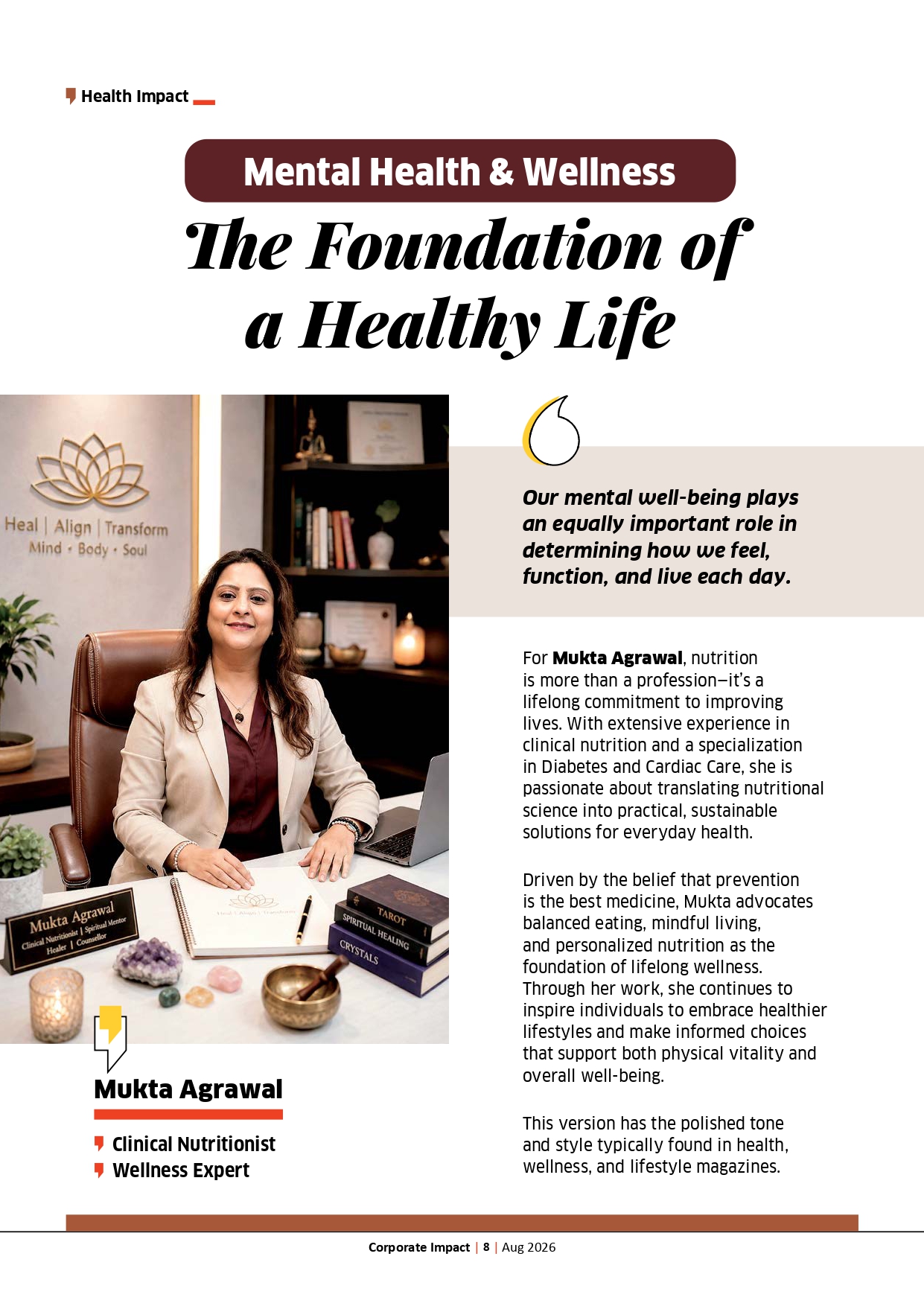
Mukta Agrawal
Clinical Nutritionist | Wellness Expert
About Mukta Agrawal
For Mukta Agrawal, nutrition is more than a profession—it’s a lifelong commitment to improving lives. With extensive experience in clinical nutrition and a specialization in Diabetes and Cardiac Care, she is passionate about translating nutritional science into practical, sustainable solutions for everyday health.
Driven by the belief that prevention is the best medicine, Mukta advocates balanced eating, mindful living, and personalized nutrition as the foundation of lifelong wellness. Through her work, she continues to inspire individuals to embrace healthier lifestyles and make informed choices that support both physical vitality and overall well-being.
This version has the polished tone and style typically found in health, wellness, and lifestyle magazines.
Mental Health and Overall Wellness
When we talk about health, most people immediately think about eating the right foods, exercising regularly, or maintaining a healthy weight. While these habits are essential, true wellness goes beyond physical health. Our mental well-being plays an equally important role in determining how we feel, function, and live each day. A healthy mind supports a healthy body, and together they create the foundation for a balanced and fulfilling life.
The Connection Between Nutrition and Mental Well-Being
As a Clinical Nutritionist, I have had the privilege of working with individuals facing a wide range of health concerns—from diabetes and heart disease to weight management and digestive issues. Over the years, I have noticed one common thread that often connects these conditions: chronic stress and poor mental well-being. Many people struggle with emotional eating, lack of motivation, disturbed sleep, anxiety, or constant fatigue. While nutrition is an essential part of recovery, it is often our emotional health that needs equal attention.

Understanding Mental Health
Mental health is not simply the absence of illness. It is our ability to cope with everyday challenges, manage emotions, build meaningful relationships, make informed decisions, and continue moving forward even during difficult times. Just as we nourish our body with wholesome food, we must also nourish our mind with positive habits, meaningful connections, adequate rest, and self-compassion.
Nutrition and Brain Health
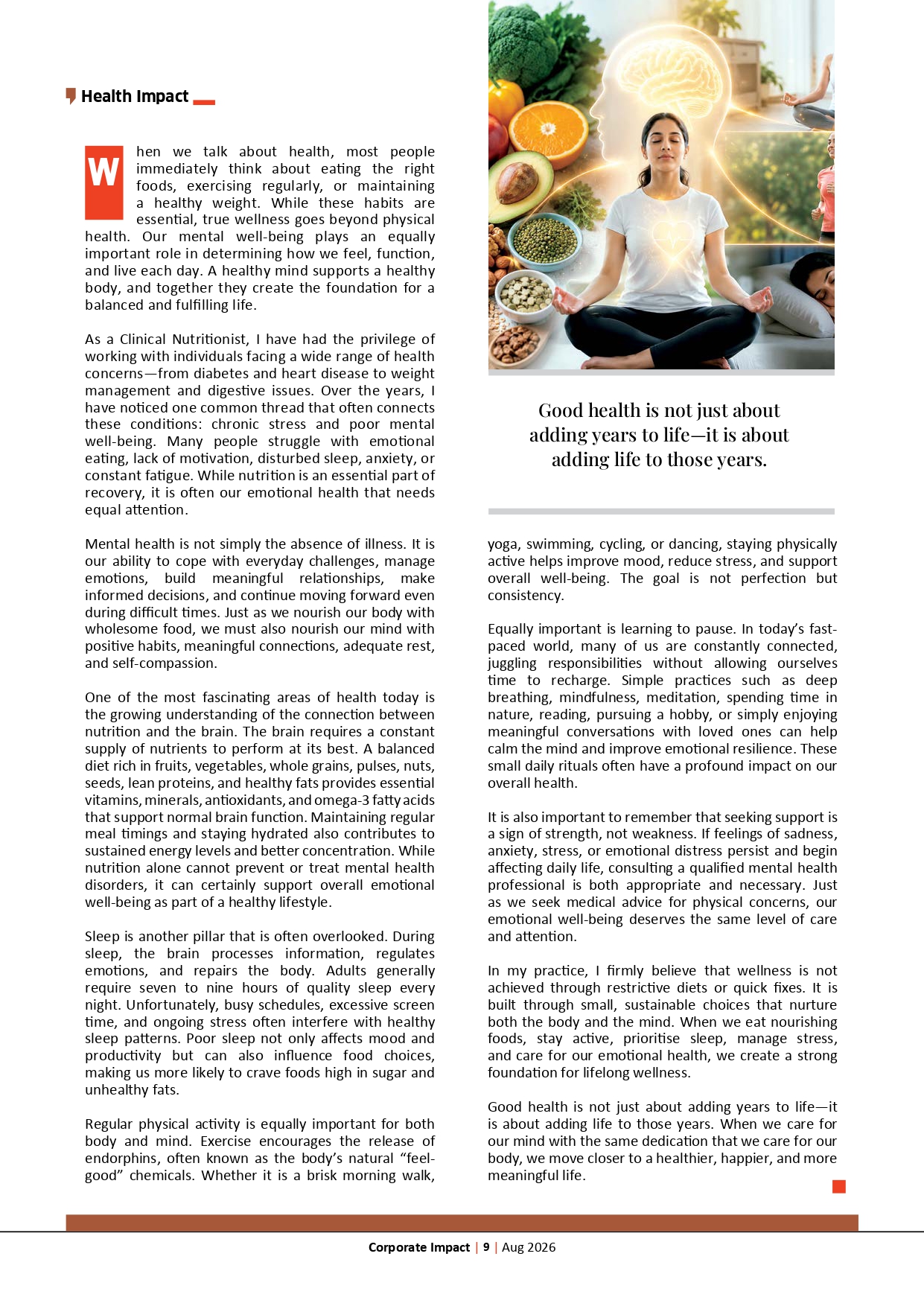
One of the most fascinating areas of health today is the growing understanding of the connection between nutrition and the brain. The brain requires a constant supply of nutrients to perform at its best. A balanced diet rich in fruits, vegetables, whole grains, pulses, nuts, seeds, lean proteins, and healthy fats provides essential vitamins, minerals, antioxidants, and omega-3 fatty acids that support normal brain function. Maintaining regular meal timings and staying hydrated also contributes to sustained energy levels and better concentration. While nutrition alone cannot prevent or treat mental health disorders, it can certainly support overall emotional well-being as part of a healthy lifestyle.
The Importance of Quality Sleep
Sleep is another pillar that is often overlooked. During sleep, the brain processes information, regulates emotions, and repairs the body. Adults generally require seven to nine hours of quality sleep every night. Unfortunately, busy schedules, excessive screen time, and ongoing stress often interfere with healthy sleep patterns. Poor sleep not only affects mood and productivity but can also influence food choices, making us more likely to crave foods high in sugar and unhealthy fats.
Physical Activity for Body and Mind
Regular physical activity is equally important for both body and mind. Exercise encourages the release of endorphins, often known as the body’s natural “feel-good” chemicals. Whether it is a brisk morning walk, yoga, swimming, cycling, or dancing, staying physically active helps improve mood, reduce stress, and support overall well-being. The goal is not perfection but consistency.
The Power of Mindfulness and Taking a Pause
Equally important is learning to pause. In today’s fast-paced world, many of us are constantly connected, juggling responsibilities without allowing ourselves time to recharge. Simple practices such as deep breathing, mindfulness, meditation, spending time in nature, reading, pursuing a hobby, or simply enjoying meaningful conversations with loved ones can help calm the mind and improve emotional resilience. These small daily rituals often have a profound impact on our overall health.
Seeking Professional Mental Health Support
It is also important to remember that seeking support is a sign of strength, not weakness. If feelings of sadness, anxiety, stress, or emotional distress persist and begin affecting daily life, consulting a qualified mental health professional is both appropriate and necessary. Just as we seek medical advice for physical concerns, our emotional well-being deserves the same level of care and attention.
Building Sustainable Wellness
In my practice, I firmly believe that wellness is not achieved through restrictive diets or quick fixes. It is built through small, sustainable choices that nurture both the body and the mind. When we eat nourishing foods, stay active, prioritise sleep, manage stress, and care for our emotional health, we create a strong foundation for lifelong wellness.
A Healthier and More Meaningful Life
Good health is not just about adding years to life—it is about adding life to those years. When we care for our mind with the same dedication that we care for our body, we move closer to a healthier, happier, and more meaningful life.