







































Dr. Simranjeet Kaur
Child Rights Advocate/ POCSO Trainer/
Founder & President Daat Foundation
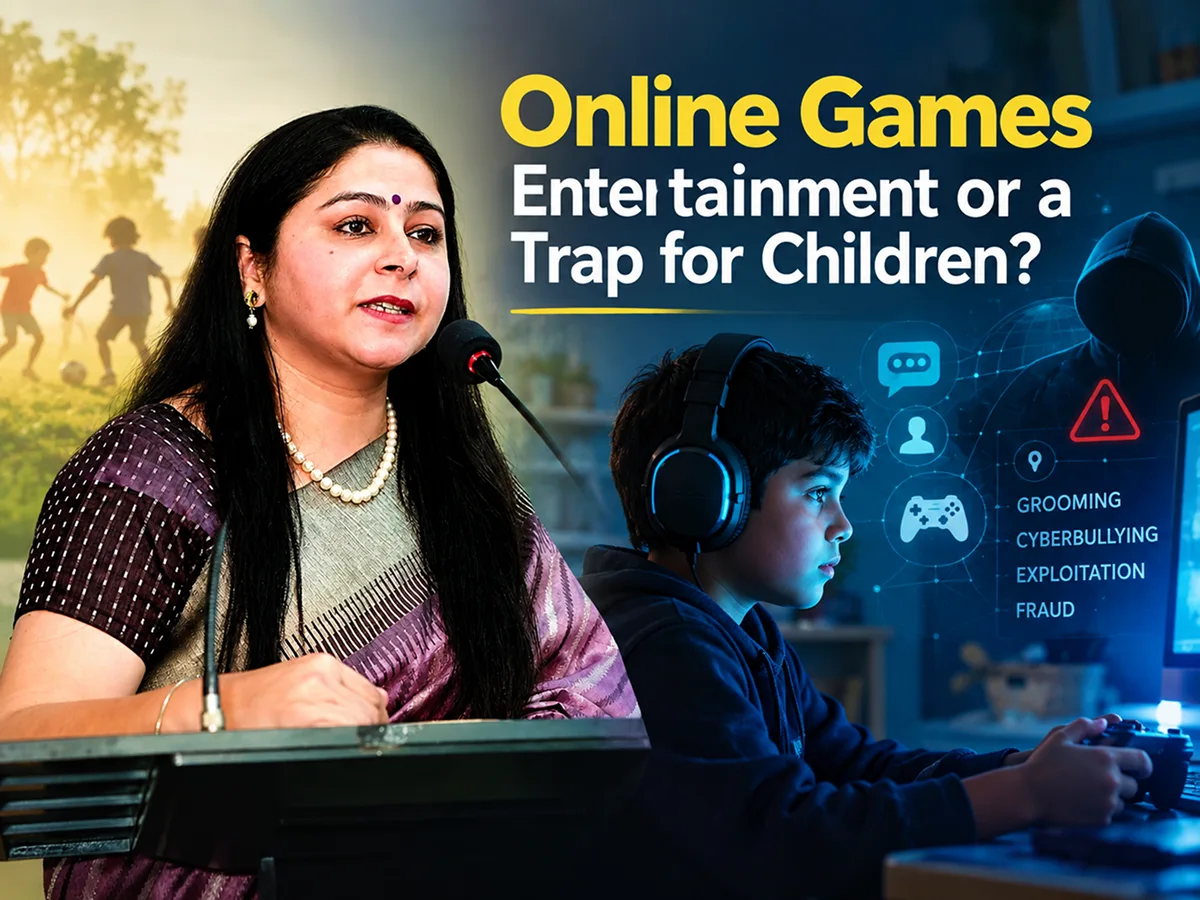
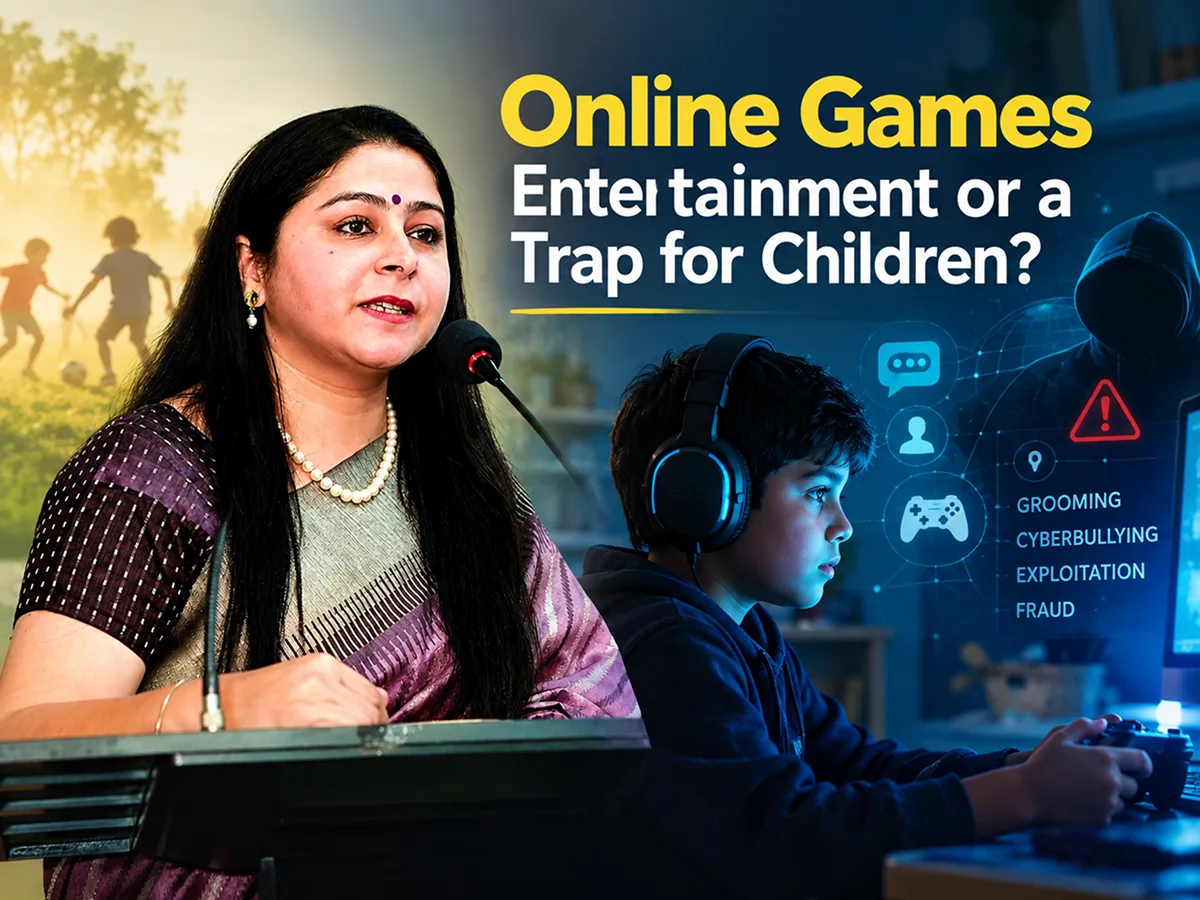
Games have always been an integral part of childhood. Through physical play, children develop cognitive abilities, emotional resilience, creativity, communication skills, teamwork, and physical fitness. Traditional outdoor games provide opportunities for social interaction, problem-solving, leadership, and healthy psychological development. However, the rapid digitalization of childhood has transformed the nature of play. Today, children increasingly spend their leisure time on online gaming platforms rather than playgrounds, interacting with unknown individuals instead of friends and neighbours. Consequently, the long-held belief that a child is safe simply because they are at home has become increasingly questionable. In the digital age, a child’s bedroom can become the gateway to a global virtual environment where strangers can communicate with them without any physical proximity.
The magnitude of this transformation is reflected in the increasing exposure of children to online risks. According to the DQ Institute, nearly six out of ten children aged 8–12 years have experienced at least one form of cyber risk. In India, the National Crime Records Bureau (NCRB) Crime in India 2024 Report recorded 1,87,702 crimes against children, representing a 5.8% increase over the previous year and an increase of more than 46% since 2020. Among cybercrimes committed against children under the Information Technology Act, 1,099 out of 1,238 cases (approximately 89%) involved the publication or transmission of sexually explicit material depicting children, demonstrating that online sexual exploitation remains the predominant cybercrime affecting minors.
Online gaming platforms have increasingly become hunting grounds for offenders who exploit the interactive nature of these platforms to identify, contact, groom, manipulate, and abuse children. Unlike traditional video games, modern multiplayer games integrate voice chats, private messaging, live streaming, virtual communities, digital marketplaces, and user-generated content, allowing children to communicate freely with unknown individuals across the world. These features provide offenders with opportunities to establish trust over time before exploiting children through sexual grooming, production of child sexual abuse material (CSAM), sextortion, cyberbullying, identity theft, financial fraud, and even recruitment for human trafficking.
The scale of these virtual environments is unprecedented. Platforms such as Roblox report more than 155 million daily active users, a substantial proportion of whom are children and adolescents. Roblox is not merely a single game but an ecosystem comprising millions of user-created games and virtual experiences where interactions occur continuously. The sheer size, anonymity, and complexity of such platforms make monitoring difficult for both parents and law enforcement agencies. Offenders can easily create fake identities, move across multiple virtual spaces, and establish relationships with children without revealing their true identity.
Beyond criminal exploitation, excessive online gaming also raises serious concerns regarding children’s mental, emotional, and social development. Excessive online gaming has been associated with adverse developmental outcomes, including social isolation, anxiety, depression, sleep disturbances, reduced academic performance, attention difficulties, emotional dysregulation, and weakened. Many contemporary games are intentionally designed using persuasive technologies, variable reward systems, social competition, continuous progression, and algorithm-driven engagement techniques that encourage prolonged use. These design mechanisms make it difficult for children to disengage voluntarily and increase the likelihood of problematic or addictive gaming behaviours.
Although parental supervision, parental control applications, privacy settings, and age restrictions remain important protective measures, they are not sufficient on their own. Determined offenders often exploit in-game communication features, encrypted messaging, voice chats, and psychological manipulation to circumvent technological safeguards. Furthermore, parents cannot supervise every moment of a child’s online activity, particularly as children increasingly access digital devices independently.
Therefore, child protection strategies must move beyond relying solely on parental controls and instead promote healthier alternatives to excessive online gaming. Encouraging children to participate in outdoor games, organised sports, physical activities, reading, creative arts, cultural activities, and face-to-face social interaction provides opportunities for healthy physical, emotional, cognitive, and social development while substantially reducing exposure to online risks. Replacing excessive screen-based recreation with real-world play not only strengthens children’s overall well-being but also limits opportunities for online predators to contact and manipulate them. While digital technology undoubtedly has educational and recreational benefits, reducing children’s dependence on online multiplayer gaming remains one of the most effective preventive measures against online grooming, cyberbullying, financial fraud, and sexual exploitation.
Parents would never allow a young child to wander alone in a city such as Mumbai or Tokyo, where millions of strangers, including potential offenders, move freely. Yet many unknowingly allow unrestricted access to online gaming platforms that are even larger, where children can interact with millions of unknown users without physical boundaries or effective supervision. If we would not leave a child alone in such a city, we should not leave them alone in an unsupervised virtual world. While parental controls and monitoring have their place, they cannot eliminate all risks. Encouraging outdoor games, sports, and real-world social interaction instead of excessive online gaming is one of the most effective ways to protect children from online grooming, cyberbullying, financial fraud, and sexual exploitation while promoting their healthy overall development.