








Introduction
Art has always been more than creativity in Indian culture — it is spirituality, mindfulness, and a reflection of human consciousness. In today’s fast-moving digital world, where distractions are replacing deeper human connection, art continues to remain a powerful medium for inner peace and emotional balance.
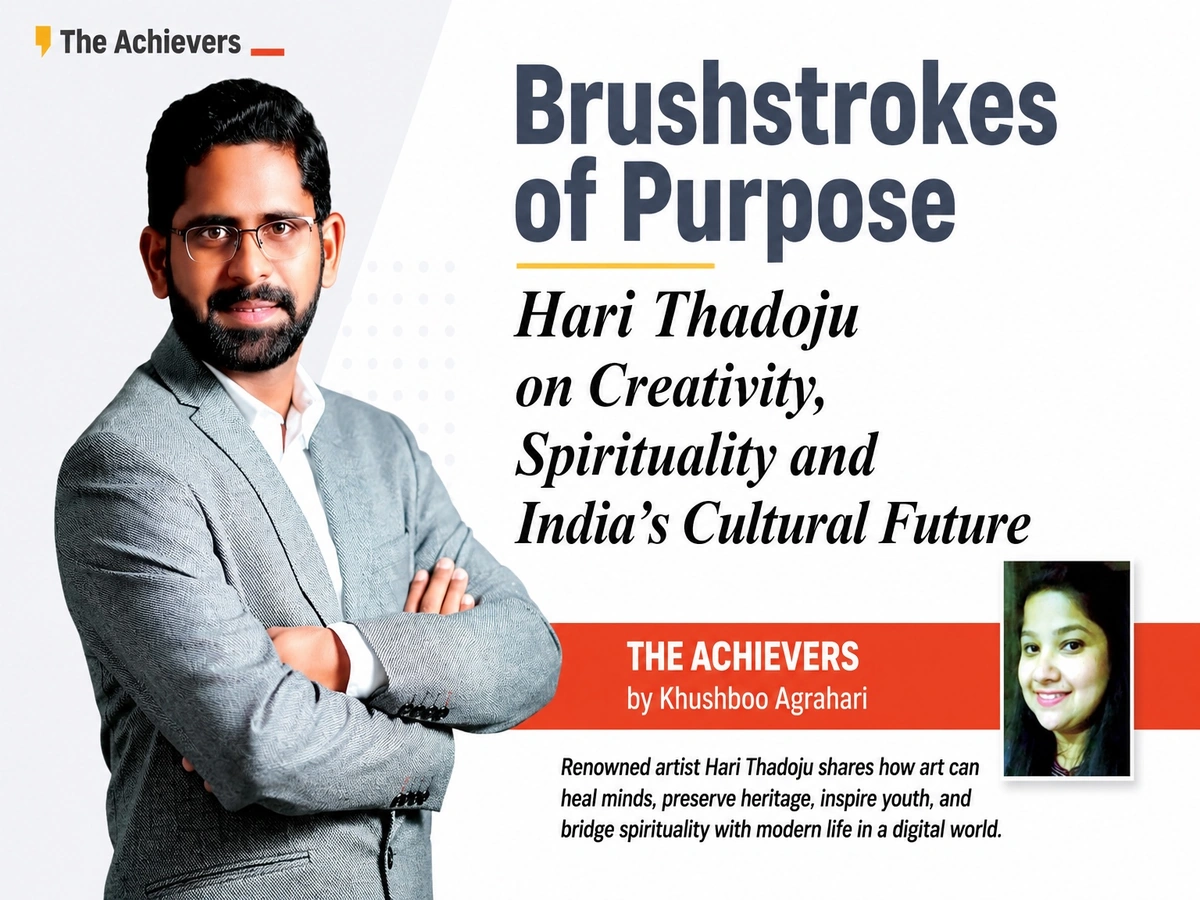
In this conversation, we speak with Hari Thadoju, an acclaimed visual artist, sculptor, and founder of StroCurve Group, whose works beautifully blend Indian spirituality, culture, and contemporary expression. Through his artistic journey, Hari shares valuable insights on creativity, conscious living, youth, education, spirituality, and the evolving role of art in shaping future generations.
1. What was the inner calling or spiritual moment that made you realize art was not just a profession, but your life’s purpose?
Hari Thadoju:
Art was never merely a career for me; it was always a silent prayer flowing through my soul. Being born into a traditional artistic family in Rajamahendravaram, I grew up watching creativity treated with devotion and discipline. Slowly I realized that true art is not created for fame alone — it is created to awaken emotions, preserve culture, and connect humanity with something divine.
There came a moment in my life when I understood that every brushstroke carries energy, every sculpture carries emotion, and every creation can become a medium of healing. That realization transformed my passion into purpose. Since then, I have seen art not as business alone, but as responsibility toward culture, spirituality, and society.
2. How do you see the relationship between spirituality and artistic expression?
Hari Thadoju:
Spirituality and art are inseparable. In Indian civilization, art was always considered sadhana a spiritual practice. Whether it is temple sculpture, devotional music, dance, painting, or literature, every form of art was designed to elevate human consciousness.
For me, spirituality in art means creating with purity of intention. When the mind becomes silent and ego disappears, creativity begins to flow naturally. In those moments, the artist is not merely creating an image — he becomes a channel through which divine emotions express themselves.
Art has the power to calm disturbed minds, heal emotional wounds, and reconnect people with their inner self. In today’s restless world, art can become meditation for humanity.
3. Can art act as a healing force for today’s youth trapped in digital distractions and social media addictions?
Hari Thadoju:
Absolutely. Today’s generation is suffering from overstimulation, comparison, anxiety, and emotional exhaustion. Endless scrolling and digital addictions are slowly draining creativity, patience, concentration, and inner peace. People are connected to screens but disconnected from themselves.
Art can heal this condition because creativity demands presence. When a young person paints, writes, sculpts, dances, or plays music, the mind naturally becomes mindful and focused. Art teaches patience, silence, observation, emotional intelligence, and discipline — qualities that modern society is losing rapidly.
4. While creating devotional artworks for sacred institutions, what emotional or spiritual state do you experience?
Hari Thadoju:
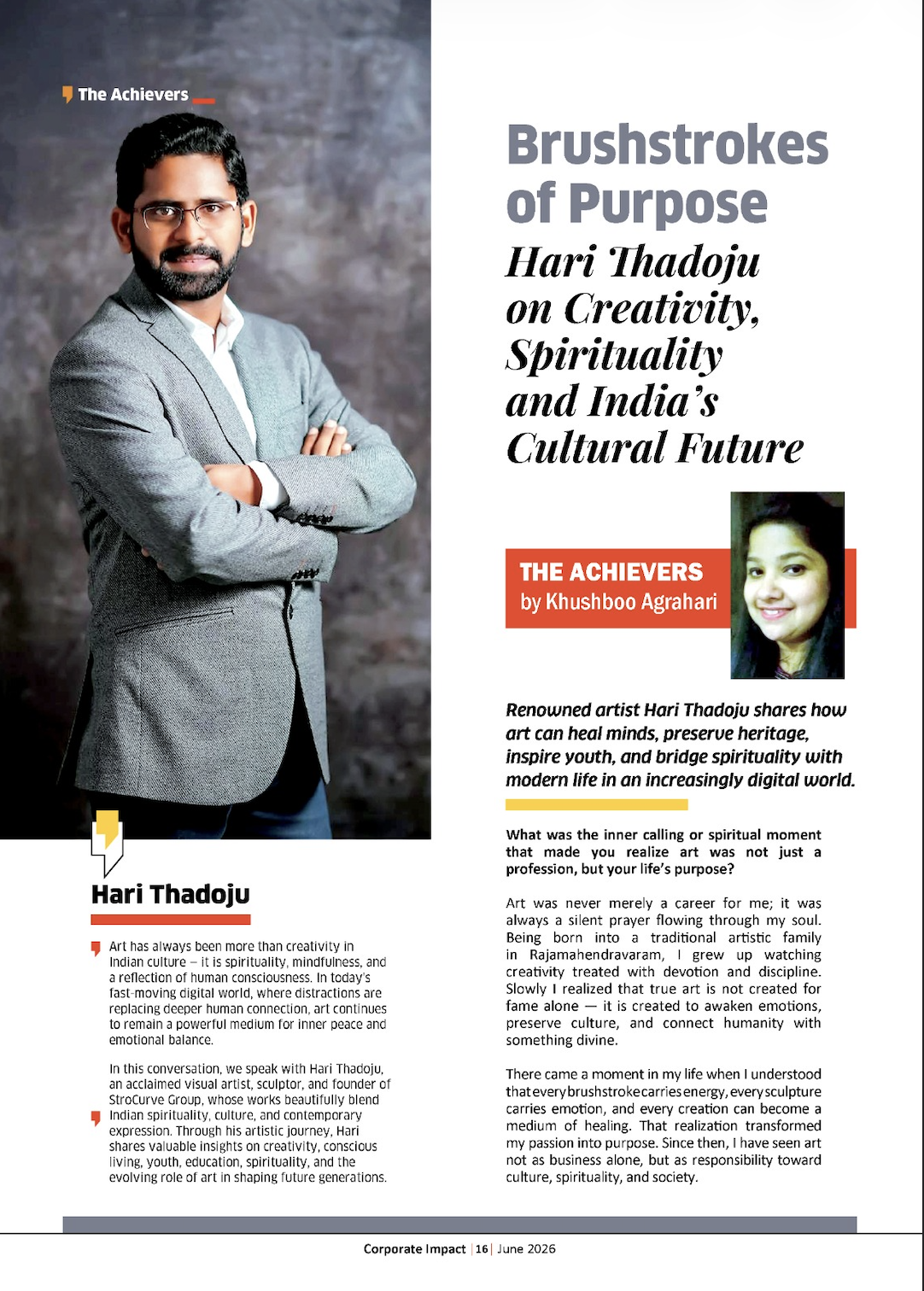
Creating devotional art is a deeply emotional and spiritual experience for me. Whenever I work on sacred paintings or sculptures connected to places like Tirumala Tirupati Devasthanams, Srisailam Temple, or Simhachalam Temple, I enter a state of silence and surrender.
In those moments, I do not feel like I am “making” art. Instead, I feel I am participating in something sacred beyond myself. Devotional art requires emotional purity because people connect with it spiritually. An artist’s inner vibration reflects in the artwork itself.
5. Should artistic education become a compulsory part of schools and colleges?
Hari Thadoju:
Without any doubt, yes. Today’s education system is producing skilled professionals but emotionally exhausted human beings. We are teaching children how to compete, but not how to feel, reflect, observe, or express themselves.
Art education should become an essential part of every school. Not every student will become an artist professionally, but every human being needs creativity to remain mentally healthy and spiritually alive.
If arts, literature, music, and creative thinking become integrated into education, we will create more conscious, compassionate, and emotionally intelligent societies.
6. How important is it for modern Indian artists to preserve cultural identity while embracing innovation?
Hari Thadoju:
India’s strength lies in its spiritual and cultural depth. Modern artists must innovate, but without disconnecting from their roots. Our traditions are not limitations — they are timeless foundations.
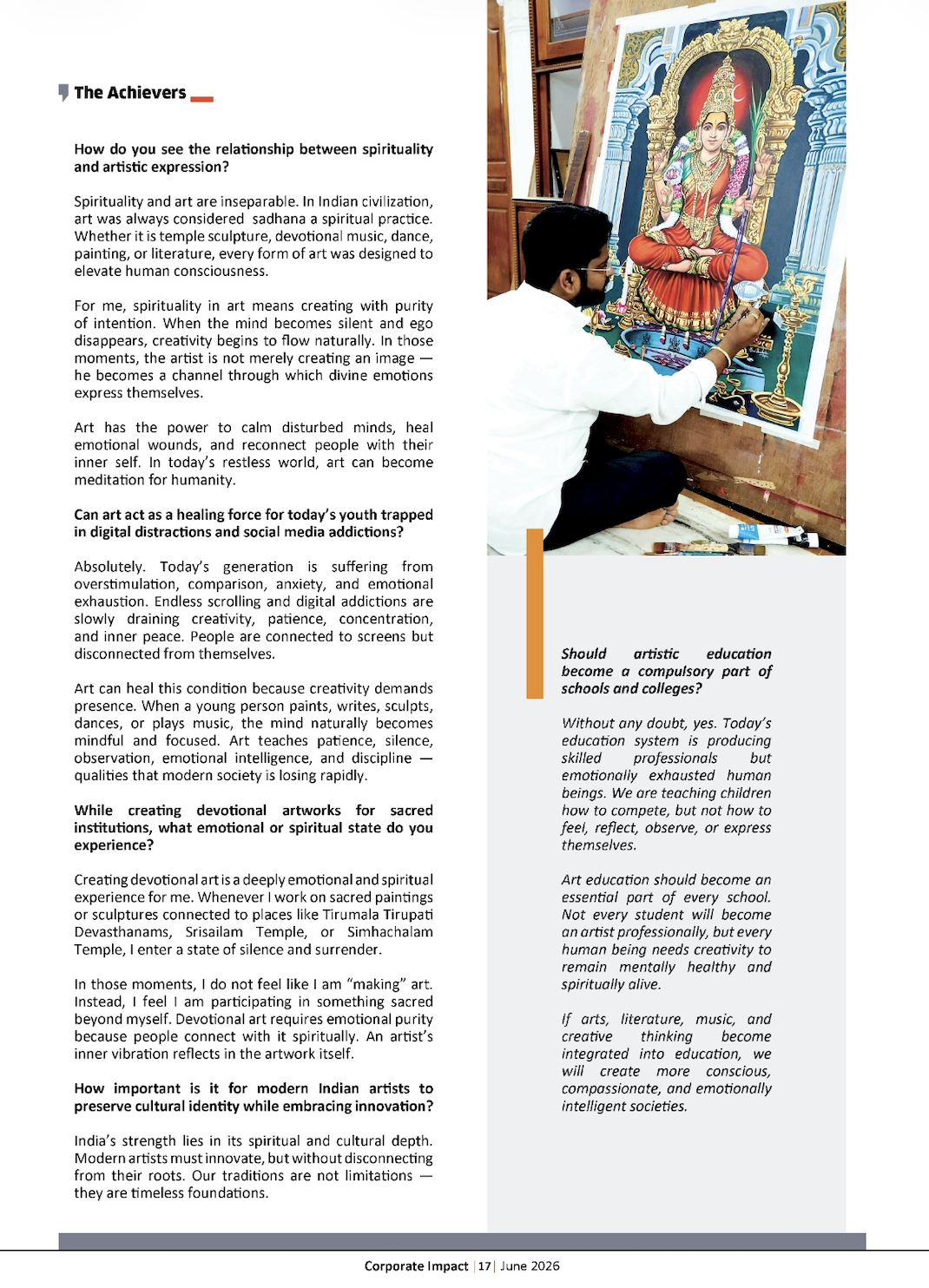
My Chandrayaan-3 artwork depicting Lord Hanuman carrying the spacecraft was an attempt to show that spirituality and scientific progress can coexist beautifully. India does not need to choose between modernity and tradition. We can lead the future while remaining deeply connected to our civilization.
7. What are the biggest struggles upcoming artists face in India today?
Hari Thadoju:
The journey of an artist is beautiful, but it is also filled with sacrifice, uncertainty, and emotional struggle. Many talented artists face financial instability, lack of recognition, social pressure, and limited institutional support. Society often values art emotionally but not economically.
Unfortunately, many artists are forced to abandon their passion due to survival pressures. I believe stronger welfare systems, grants, scholarships, art infrastructure, and government-backed cultural programs are necessary for nurturing future talent in India.
8. Beyond awards and recognition, what gives you the deepest satisfaction as an artist?
Hari Thadoju:
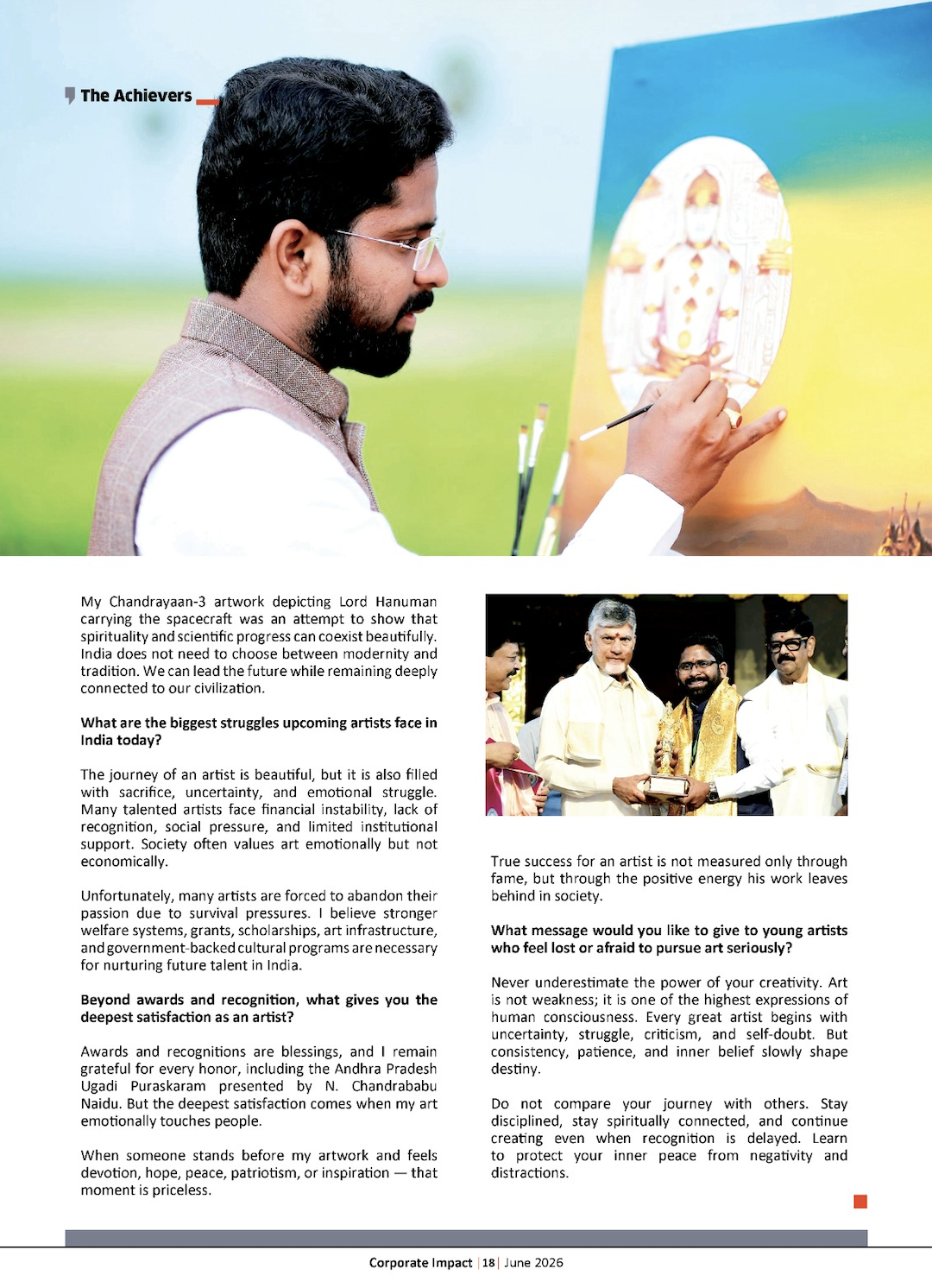
Awards and recognitions are blessings, and I remain grateful for every honor, including the Andhra Pradesh Ugadi Puraskaram presented by N. Chandrababu Naidu. But the deepest satisfaction comes when my art emotionally touches people.
When someone stands before my artwork and feels devotion, hope, peace, patriotism, or inspiration — that moment is priceless.
True success for an artist is not measured only through fame, but through the positive energy his work leaves behind in society.
9. What message would you like to give to young artists who feel lost or afraid to pursue art seriously?
Hari Thadoju:
Never underestimate the power of your creativity. Art is not weakness; it is one of the highest expressions of human consciousness. Every great artist begins with uncertainty, struggle, criticism, and self-doubt. But consistency, patience, and inner belief slowly shape destiny.
Do not compare your journey with others. Stay disciplined, stay spiritually connected, and continue creating even when recognition is delayed. Learn to protect your inner peace from negativity and distractions.