






















Classrooms Without Walls: Four Indian Schools Rewriting What Education Looks Like
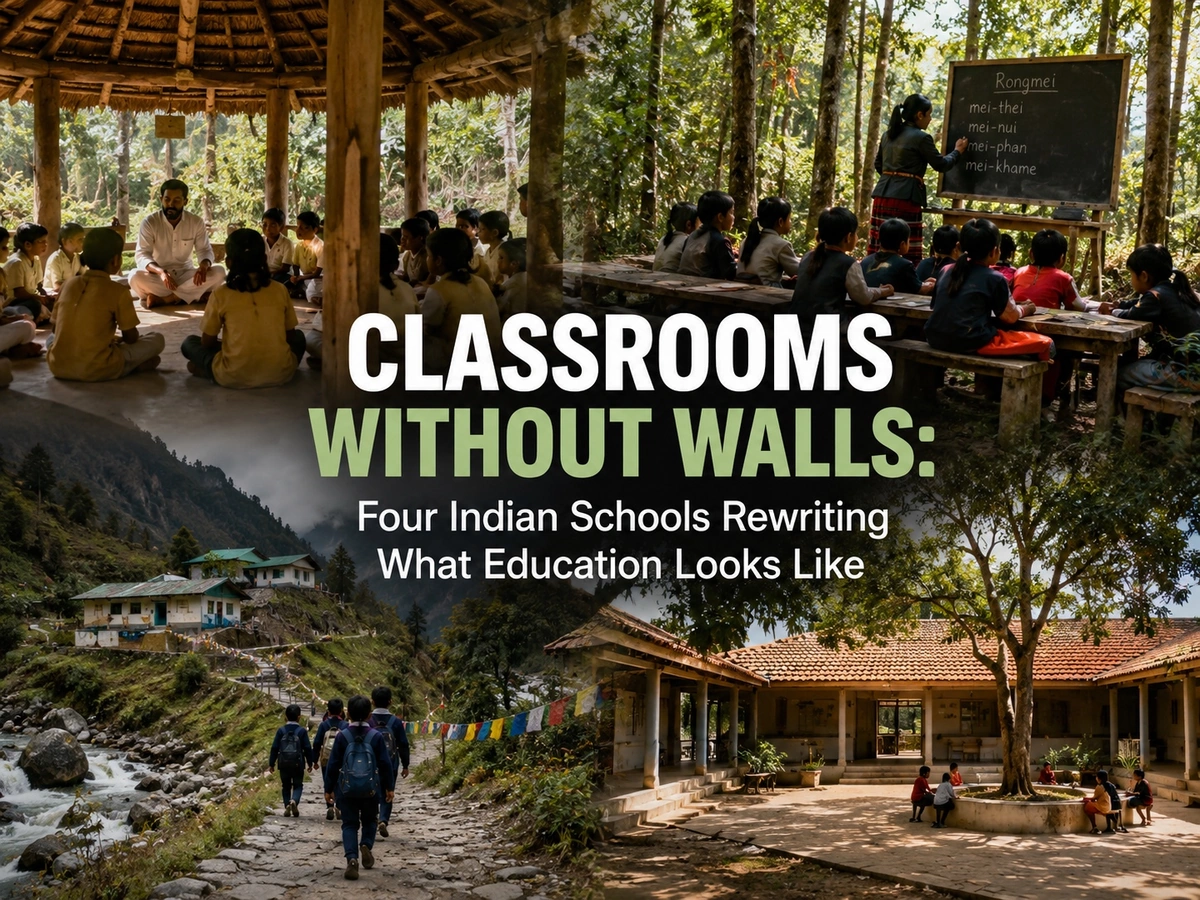
Education is often imagined as rows of desks, classrooms, and blackboards. Yet across India, a quiet movement is proving that learning can flourish in places far removed from conventional schools. Four institutions, each shaped by its geography and culture, are demonstrating that education becomes far more meaningful when it adapts to its surroundings instead of forcing every child into the same mold.
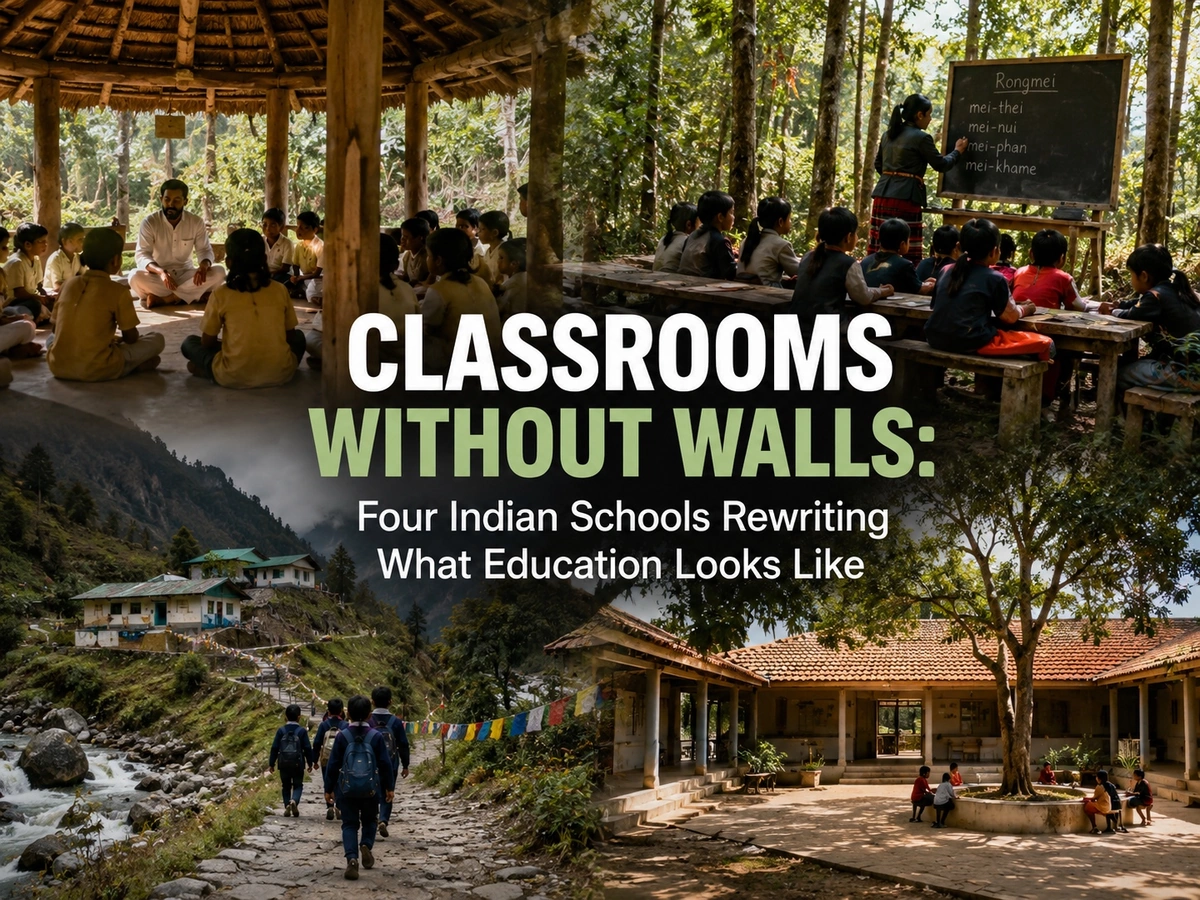
In Bengaluru, a modern gurukul-inspired school embraces India’s ancient tradition of holistic learning. Here, education extends beyond textbooks, encouraging students to develop discipline, values, creativity, and a strong connection with their mentors through experiential learning and daily practice.
Far away in Manipur, classrooms blend seamlessly into forests. Lessons unfold beneath towering trees where nature itself becomes the teacher. Students learn in the Rongmei language, preserving their cultural heritage while developing practical knowledge through direct interaction with the environment around them.
High in the remote Dzongu region of Sikkim, a mountain school has transformed geographical isolation into a lesson in perseverance. Reaching the school requires hours of travel across rugged terrain, rivers, and steep mountain paths. Despite these challenges, dedicated teachers regularly visit families to ensure that every child continues their education, proving that commitment can overcome even the greatest physical barriers.
Meanwhile, in Maharashtra, an innovative learning centre designed like a traditional village has reimagined what a school can feel like. Instead of rigid corridors and enclosed classrooms, the campus features open courtyards, interconnected pathways, and naturally lit spaces that encourage exploration, collaboration, and a sense of belonging within the community.
Although each of these schools follows a different philosophy, they share one common belief: education should adapt to the child—not the other way around. By embracing local languages, cultural traditions, natural surroundings, and community participation, they create learning experiences that are both relevant and deeply engaging.
As conversations around the future of education continue to evolve, these schools offer valuable lessons for policymakers, educators, and parents alike. They remind us that meaningful education is not defined by walls or standardized systems but by curiosity, inclusion, and the ability to inspire lifelong learning. In doing so, they are quietly rewriting what education can look like for the next generation.