
































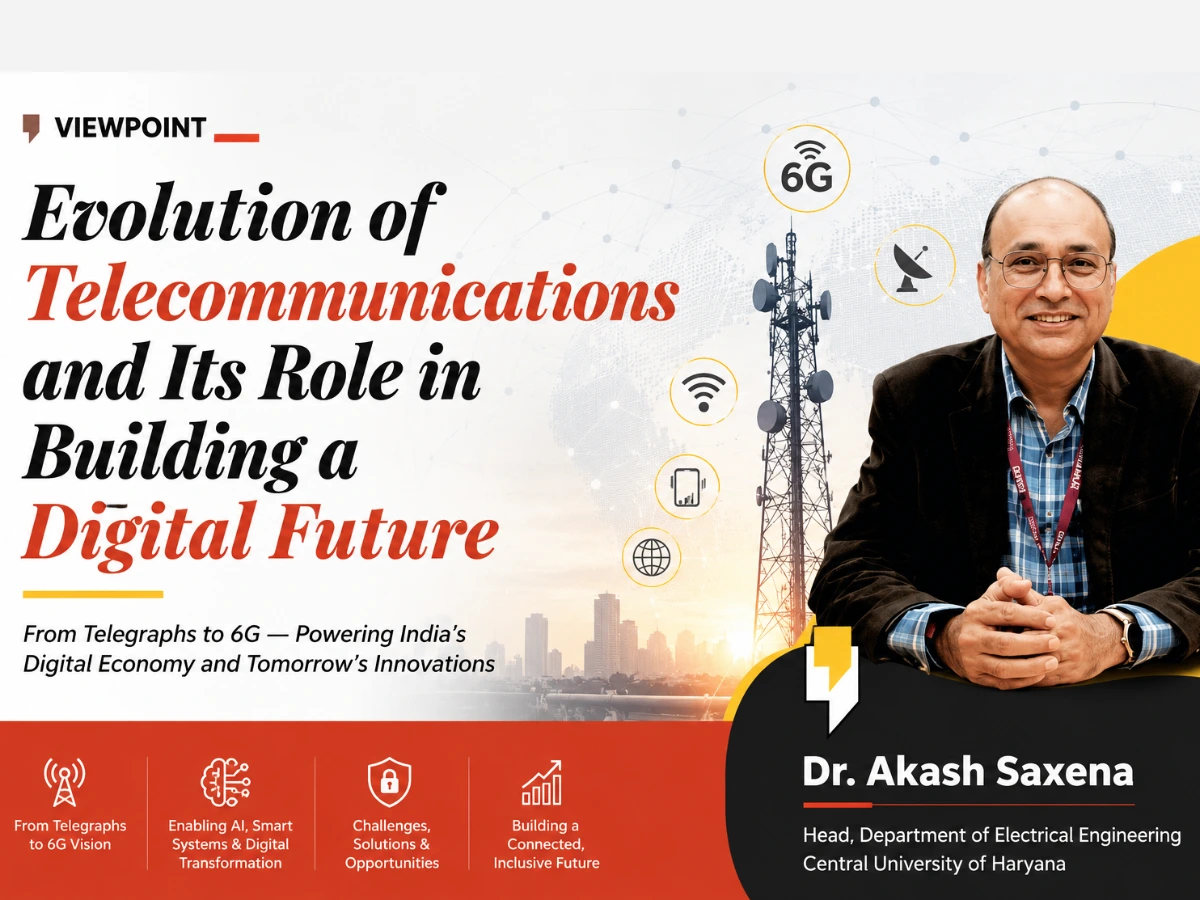





Evolution of Telecommunications and Its Role in Building a Digital Future
Telecom industry has seen major reforms in coming years. Indian government is majorly focusing on deployment of 6G technology along with manufacturing of silicon technology for enhancing display ecosystem. This would position India as a global hub for electronic manufacturing.
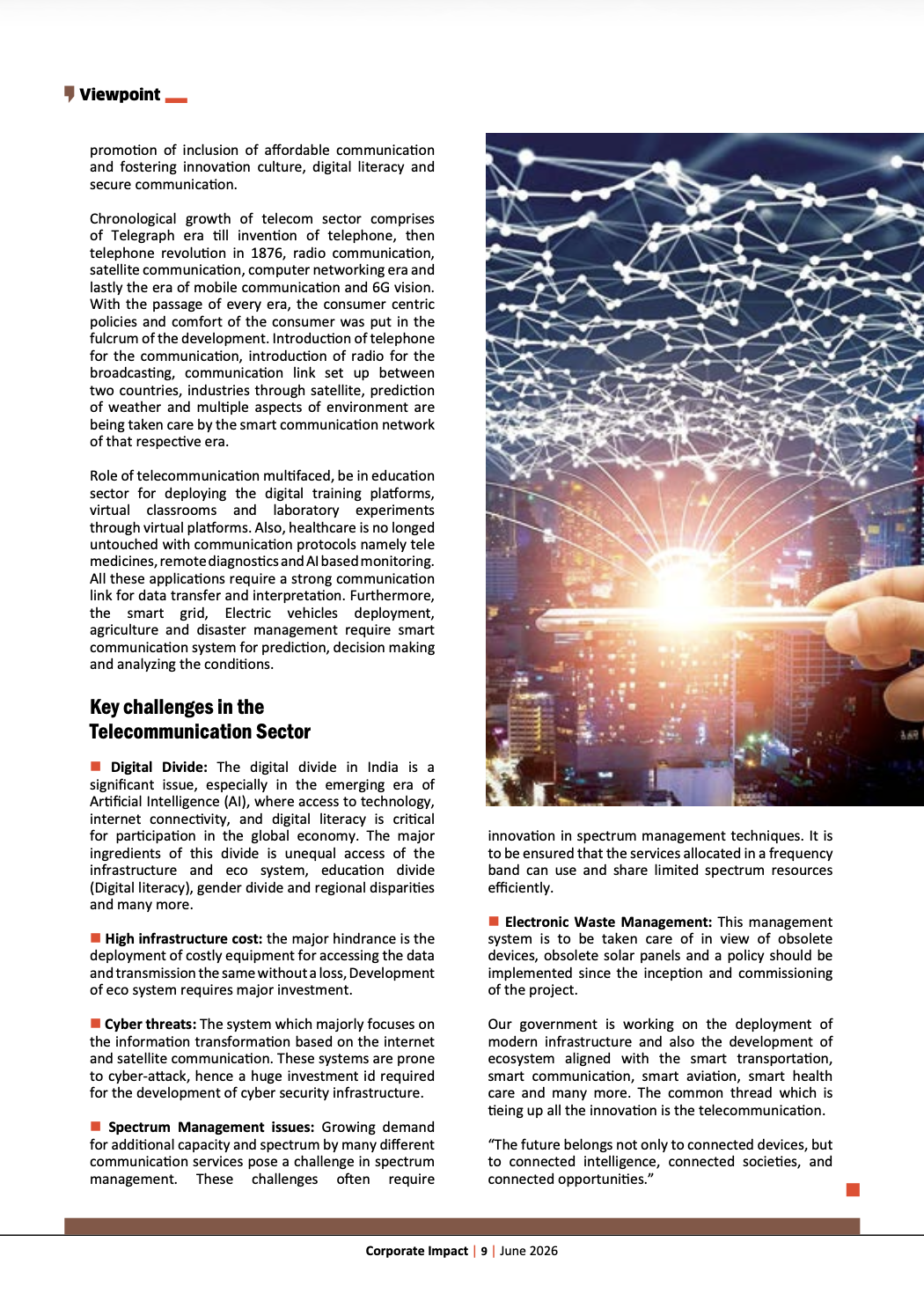
Telecommunication is a basic foundation of digital economy, Smart governance, ArtificialIntelligence, Smart energy systems and Cybersecurity ecosystems. When we talk about any decision-making protocols effective communication between two devices is inevitable. Hence,Deployment of smart technologies in the sector of agriculture, smart grid. Mobile communication, congestion management, and many more industrial applications require a strong communication.
Telecom day is celebrated every year on 17th May, that marks the establishment of International Telecommunication Union in 1865. Initially it was identified as a potential source of communication between two nations through telegraph communication but later on it encompassed a big role that involves digital connectivity and information society development. The objectives of this celebration are to promote awareness, prevention of digital divide amongst the nation, promotion of inclusion of affordable communication and fostering innovation culture, digital literacy and secure communication.
Chronological growth of telecom sector comprises of Telegraph era till invention of telephone, then telephone revolution in 1876, radio communication, satellite communication, computer networking era and lastly the era of mobile communication and 6G vision. With the passage of every era, the consumer centric policies and comfort of the consumer was put in the fulcrum of the development. Introduction of telephone for the communication, introduction of radio for the broadcasting, communication link set up between two countries, industries through satellite, prediction of weather and multiple aspects of environment are being taken care by the smart communication network of that respective era.
Role of telecommunication multifaced, be in education sector for deploying the digital training platforms, virtual classrooms and laboratory experiments through virtual platforms. Also, healthcare is no longed untouched with communication protocols namely tele medicines, remote diagnostics and AI based monitoring. All these applications require a strong communication link for data transfer and interpretation. Furthermore, the smart grid, Electric vehicles deployment, agriculture and disaster management require smart communication system for prediction, decision making and analyzing the conditions.
Key challenges in the Telecommunication Sector:
1. Digital Divide: The digital divide in India is a significant issue, especially in the emerging era of Artificial Intelligence (AI), where access to technology, internet connectivity, and digital literacy is critical for participation in the global economy. The major ingredients of this divide is unequal access of the infrastructure and eco system, education divide (Digital literacy), gender divide and regional disparities and many more.
2. High infrastructure cost: the major hindrance is the deployment of costly equipment for accessing the data and transmission the same without a loss, Development of eco system requires major investment.
3. Cyber threats: The system which majorly focuses on the information transformation based on the internet and satellite communication. These systems are prone to cyber-attack, hence a huge investment id required for the development of cyber security infrastructure.
4. Spectrum Management issues: Growing demand for additional capacity and spectrum by many different communication services pose a challenge in spectrum management. These challenges often require innovation in spectrum management techniques. It is to be ensuredthat the services allocated in a frequency band can use and share limited spectrum resources efficiently.
5. Electronic Waste Management: This management system is to be taken care of in view of obsolete devices, obsolete solar panels and a policy should be implemented since the inception and commissioning of the project.
Our government is working on the deployment of modern infrastructure and also the development of ecosystem aligned with the smart transportation, smart communication, smart aviation, smart health care and many more. The common thread which is tieing up all the innovation is the telecommunication.
“The future belongs not only to connected devices, but to connected intelligence, connected societies, and connected opportunities.”