





























Italy Hits a Major Reforestation Milestone as Forests Reclaim Abandoned Land
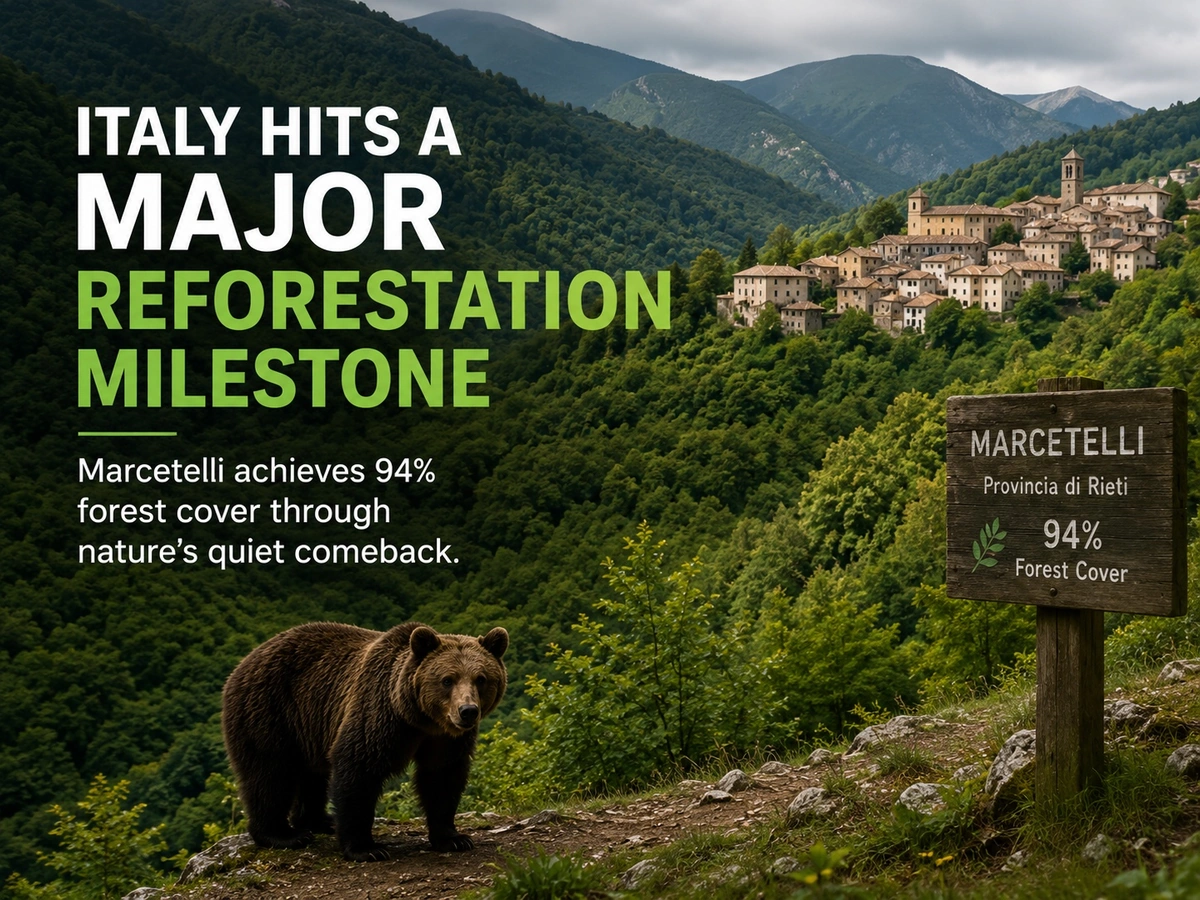
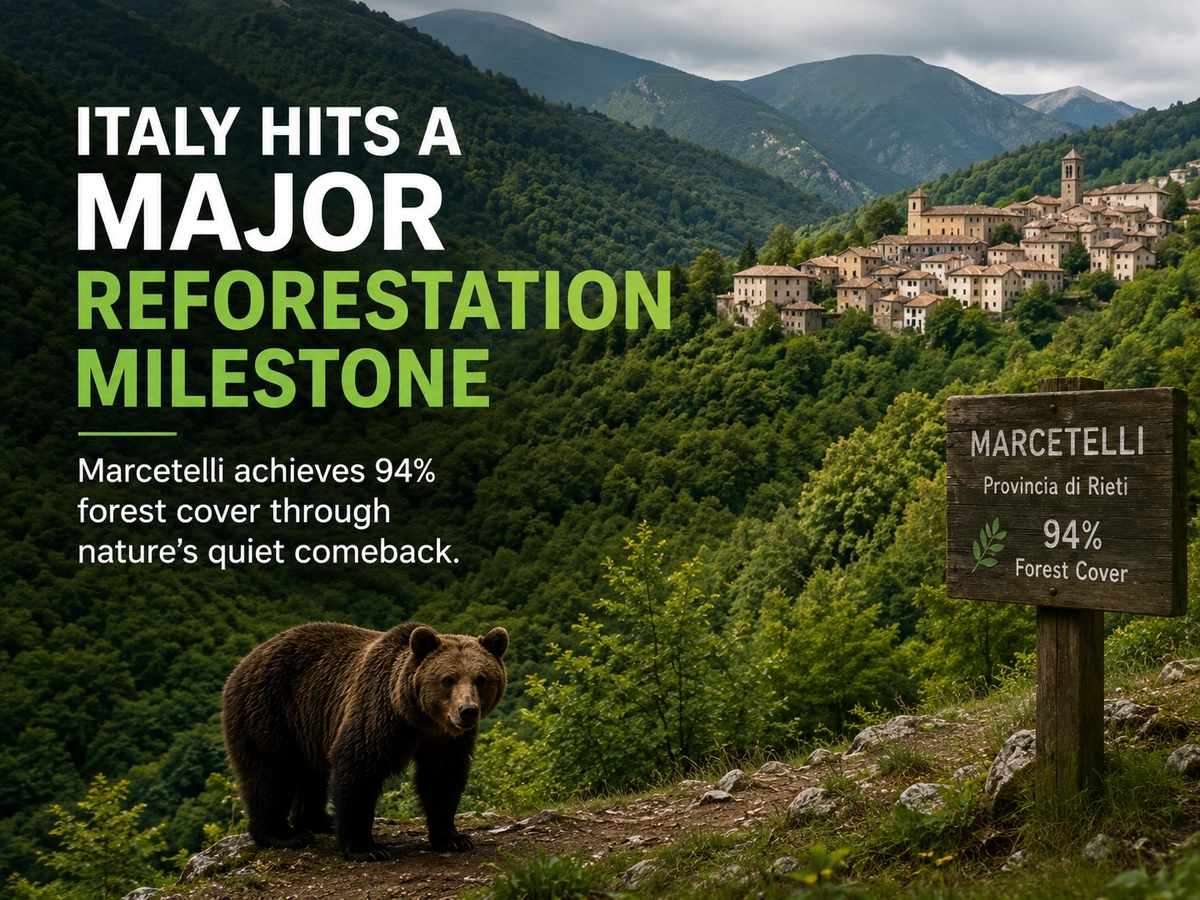
Hidden among the rolling hills of Italy’s Rieti Province, the small municipality of Marcetelli has quietly become one of the country’s greatest environmental success stories. According to recent findings, nearly 94% of its land is now covered by forests, making it one of the most densely forested regions in Italy and demonstrating the remarkable power of natural ecosystem recovery.
The transformation did not begin with a massive tree-planting campaign. Instead, it emerged from changing demographics. As younger generations migrated from rural mountain communities to urban centres in search of better opportunities, agricultural fields and grazing lands were gradually abandoned. Left undisturbed, nature began reclaiming the landscape, allowing native forests to regenerate naturally over time.
This process of natural reforestation has produced benefits that extend far beyond increasing tree cover. Marcetelli has become an important carbon sink, helping absorb atmospheric carbon dioxide while improving air quality, protecting freshwater resources, reducing soil erosion, and strengthening the region’s resilience against climate change. These ecosystem services provide immense environmental and economic value that would otherwise require significant investment through artificial interventions.
Perhaps the greatest beneficiary of this restored landscape is the Marsican brown bear, one of the world’s rarest bear subspecies, found only in central Italy. With an estimated population of around 60 individuals, the species depends on large, connected forest habitats for survival. Expanding forest corridors provide safer movement, better food availability, and improved breeding opportunities, increasing the species’ long-term chances of survival.
Marcetelli’s story highlights an important lesson for global conservation efforts. Successful reforestation is not measured solely by the number of trees planted but by the restoration of complete ecosystems that support biodiversity, climate resilience, and healthy natural landscapes. By allowing forests to reconnect fragmented habitats and regenerate naturally, communities can create lasting environmental benefits that endure for generations.
As countries around the world intensify efforts to combat climate change and biodiversity loss, Marcetelli stands as a powerful reminder that sometimes the most effective environmental solutions emerge when nature is simply given the opportunity to heal itself.